
How to measure the sustainability of school meals: Inspirations for participatory social science in Indonesia for optimizing society’s benefits from the Makan Bergizi Gratis policy
Mara Petruzzelli (Department of Agricultural and Food Sciences, Alma Mater Studiorum – University of Bologna, Bologna, Italy), Rico Ihle (Department of Social Sciences, Wageningen University, Wageningen, The Netherlands & Faculty of Agriculture, Universitas Padjadjaran, Bandung, Indonesia)
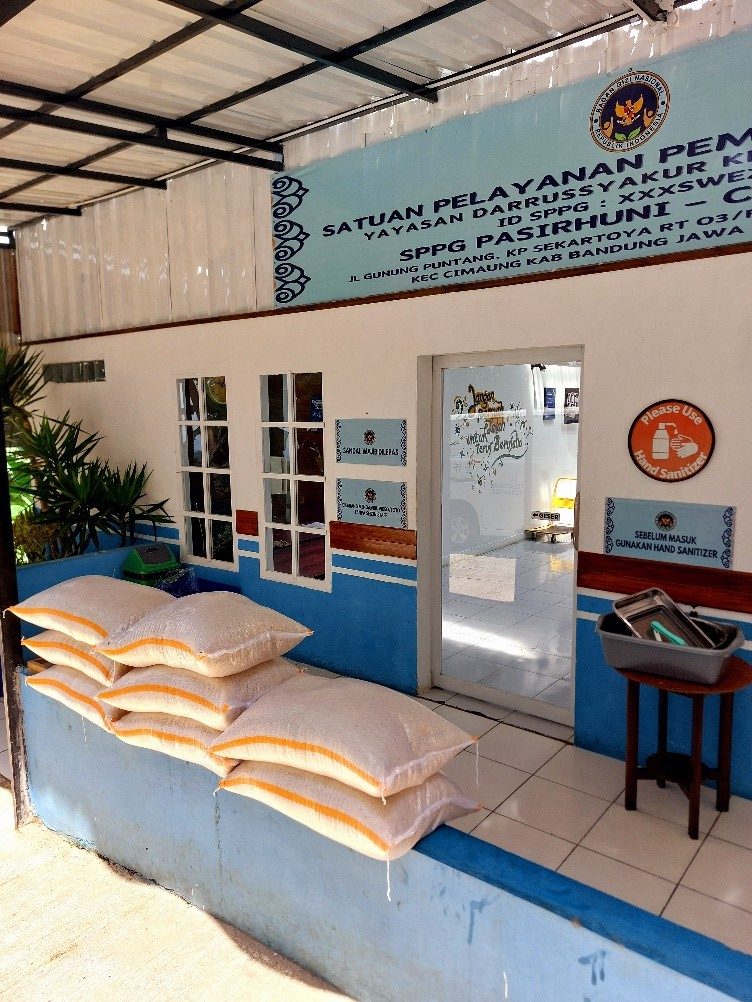
The more than 110 member countries of the United Nations’ global School Meals Coalition stress that school meals programmes are one of the most impactful public initiatives to support governments in progressing towards their policy agendas for achieving the Sustainable Development Goals (SDGs). Overwhelming evidence (WFP, 2025) shows that school meals programmes are not only an opportunity to improve children’s well-being, but they are also the ideal food system segment to foster sustainable consumption patterns for the children’s lifetime (Pastorino et al., 2024). The blog article From scientist’s desk to the school canteen[RI1] outlines various ways how Indonesia can contribute to this evidence thanks to the many research and experience opportunities created by the countrywide roll-out of the MBG[RI2] (‘Free Nutritious Meals’) programme being introduced since the beginning of 2025. Picture 1 shows one example of a newly established school kitchen in a rural area south of Bandung.
Picture 1: Newly established school kitchen in Cimaung (West Java)
Source: Authors.
For these reasons, school meals go even much beyond improving food security and nutrition (SDG2) especially for vulnerable parts of the population. They are supporting progress towards 11 of the 17 SDGs (School Meals Coalition, 2025). Even more, a new thematic SDG on school meals being part of SDG 4 ‘Quality education’ has been accepted by the UNESCO for being included into UN’s Agenda 2030. The new SDG aims to “ensure that all children have the opportunity to receive a safe, healthy, nutritious meal in schools” by 2030 (WFP, 2025).
Given the legacy of the School Meals Coalition led by the World Food Programme, almost 60% of all countries worldwide have up to now implemented concrete steps to either set up new or improve existing school catering services in an efficient and sustainable way. Indonesia joined the Coalition in 2025, given the centrality of the MBG programme for President Prabowo Subianto’s goals for Indonesia which aims to provide free meals to all 60 million schoolchildren. As part of Indonesia’s participation to the Coalition, one of the most important commitments is to ensure that the catering is set up and managed sustainably. This means multiple economic, social, environmental and nutritional aspects should be accounted for when evaluating school meals. Those aspects include using the newly introduced lunches for the benefit of children’s food education, ensuring as much as possible local procurement, e.g., by purchasing the raw materials from small-scale farmers or designing food consumption experiments in the canteen to improve children’s health (Republic of Indonesia, 2025).
In order to set up such catering structures in a resource-efficient manner and monitor progress and success as well as to identify best (and worst) practices, national governments have made efforts to clarify and measure what sustainability of school catering means to them and their societies. A school meal is seen as sustainable if it is “delivering equitable and healthy foods for children, produced in ways that do not pollute or overexploit natural resources and protect biodiversity” (Pastorino et al., 2025). The relevant ministries, school and food security authorities, teachers, families, as well as extension and nutrition specialists need, thus, to find a common understanding when they consider school meals as sustainable for their living reality and the challenges and endowments od their region or country.
They need to find consensus what they consider as healthy diets for schoolchildren (nutritional sustainability), what broader social benefits for families, local communities and society at large they wish the catering services to ideally achieve (social sustainability), what financial basis is their preferred choice to fund the school catering in feasible and enduringly affordable ways (economic sustainability) and, least, how to follow a resource-efficient approach which honours, respects and preserves the use of the local and regional natural environment as much as possible (environmental sustainability). Evaluating progress and achievements as well as enabling learning from each other needs precise measurement conducted by objective parties, such as qualified and suitably staffed government bodies. Yet, how to exactly measure these different dimensions of school meals so that national priorities are sufficiently reflected and comparability of results across different regions, countries and years is guaranteed, is a question still to be answered by policymakers, civil society and researchers.
Living laboratories emerged as a powerful method to identify and operationalize approaches to monitor and assess the performance of school meals in various ways, among others also with respect of their sustainability. These laboratories can be configured as physical or virtual environments. Their crucial characteristic is that they provide a safe and open space in which groups of citizens with very different interests meet and communicate with policymakers, scientists, companies and other types of experts in order to co-create solutions to challenges to their societies. This process of exchanging experiences, communicating and jointly identifying priorities, chances and limitations ideally follows a scientific approach in the form of an explicitly written down protocol as, for example, described in detail in Petruzzelli et al. (2025).
In the north of Italy, the living laboratory Laboratory of Sustainable Catering[RI3] co-led by the regional government and the University of Bologna has been established. The laboratory brings together education experts, researchers, and policymakers to co-design solutions for understanding and improving the sustainability of school canteens and translate the consensuses about nutritional, social and environmental benefits of school meals into concrete societal and policy action. One central goal of the laboratory was to develop a tool enabling the evaluation and monitoring of the performance of the lunch catering across the province’s schools in regard of three sustainability dimensions.
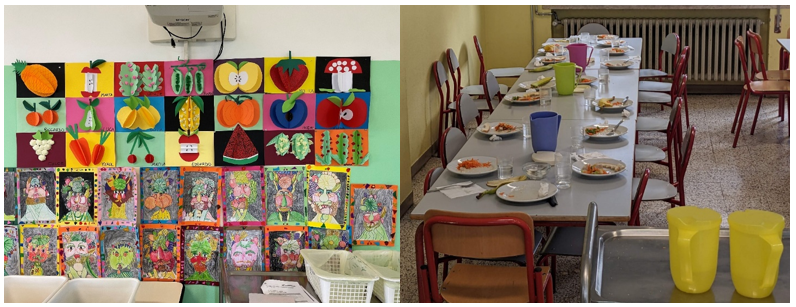
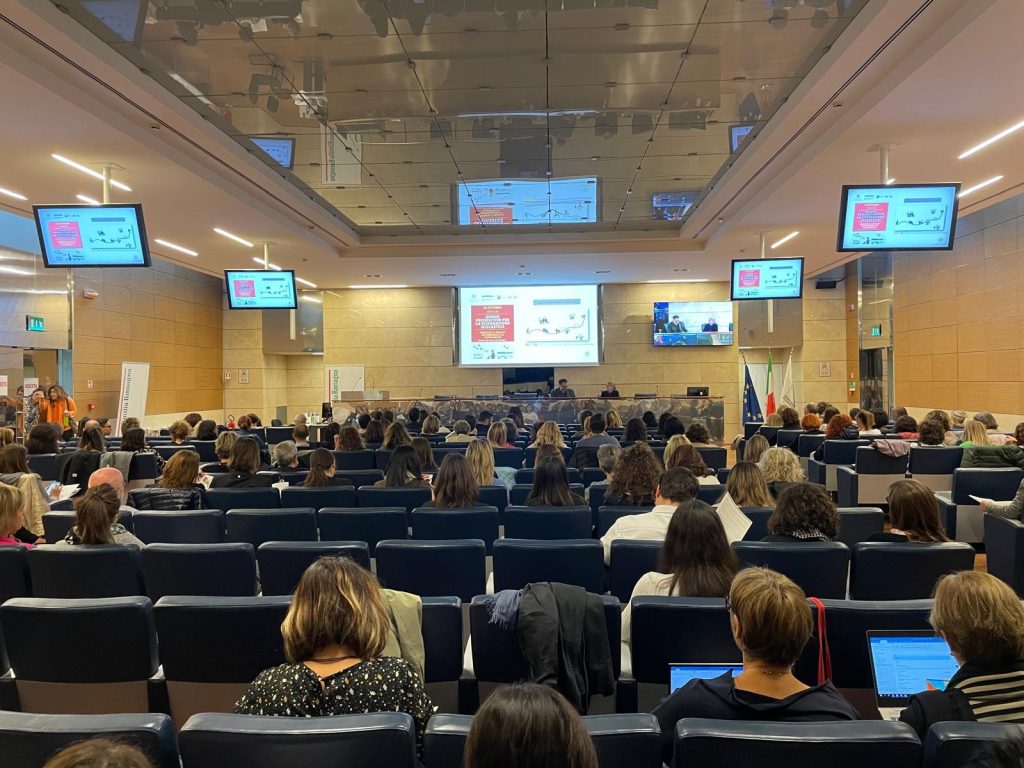
The scientific article of Petruzzelli et al. (2025a) documents all details of the research process as well as the research outcome. The structure and the dimensions covered by the developed assessment tool as well as the specific measurements to be gathered have been selected via a participatory process with a group of expert stakeholders who are part of this living laboratory (Picture 3 shows one of the meetings in the Laboratory of Sustainable Catering). Several workshops have been organized which focused on the definition of a common understanding of the main challenges, the joint choice of indicators and their measurement scales. As a result, the tool of Petruzzelli et al. (2025a) evaluates nutritional, social and environmental sustainability of school’s specific lunch catering choices. It is based on objectives measurements of 23 nutritional, 10 environmental, and 9 social indicators (see Picture 2 for two examples of qualitative indicators measures). These 42 pieces of evidence are then aggregated into a single sustainability score which ranges from 0 to 75 and is easy to interpret. This overall score can be split up into sub-scores for each of the three dimensions. To evaluate how societal preferences which differ from the ones in northern Italy would impact the structure and interpretation of the score, the analysis also designs three scenarios which reflect possible alternative priorities of stakeholders beyond Italy.
Picture 2: Aspects measured by the tool’s social (left) and environmental indicators (right): educational material and re-usable dishes used in school canteens
Source: Authors.
Jointly involving various interest groups in the development of the monitoring approach allowed for getting a complete and intimate understanding of their views and priorities that the assessment tool must take into consideration in order to be accepted by them as being sufficiently tailored to their reality. Their consensus reached in this communication process also clarifies which sustainability areas the Italian society wishes to get more closely monitored. The perspectives of the various participating interest groups – ranging from food practitioners such as catering companies, to teachers and policy makers – were collected and assembled in a systematic and structured format and translated into numerical measurement. Therefore, the indicators, the measurement scales and their aggregation mechanism match the needs and priorities of the practitioners and are aligned with the policy goals of the community. Additionally, the use of a participatory approach has proven to have led to improved acceptance, ownership and trust of the approach. The monitoring tool is designed in a user-friendly format and is, as a result, straightforwardly usable by school food professionals for evaluating school meals. It has been adopted as a binding requirement for all schools in the Italian region and proved effective for informing policymakers and the responsible authorities in an easily-communicable format.
Picture 3: Presentation and discussion of the final sustainability assessment tool with the stakeholders of the living laboratory in Italy
Source: Authors.
The developed sustainability tool can serve as a first strategic blueprint for similar sustainability monitoring approaches for ensuring the success of Indonesia’s school food ambitions. Although that the approach of Petruzzelli et al. (2025a) is tailored to Italian sustainability priorities, it offers a transparent and reproducible mechanism that can be piloted in Indonesian school canteens to verify if some of the proposed indicators have relevance here too. The use of this tool in Italy informs Indonesian authorities about the main challenges and benefits encountered in its design and practical application. Knowing what aspects function well and what are the main barriers can place Indonesian authorities in a privileged position for replicating or adapting such a tool which will support the sustainable development of the MBG programme in the years to come. The application of an adapted version of the tool in Indonesia can inform authorities not only about how to facilitate self-monitoring of individual schools’ sustainability progresses, but also enable comparing achievements and trajectories across years and (groups of) schools. This can serve for authorities to straightforwardly identify where, when and how to intervene to facilitate the change needed for realizing Indonesia ambition.
All public authorities at the various levels of governance in Indonesia, which have their roles in the implementation of the MBG programme, can gain practical inspiration from integrating various societal interest groups into the design of governmental evaluation methods fulfilling scientific exactness and integrity standards via the living laboratory approach. Following the methodological guidance on the procedure for designing the tool and conducting participatory approaches outlined by Petruzzelli et al. (2025a) offers authorities at the provincial and regional levels the chance to replicate similar living laboratories in Indonesia. As part of such a living laboratory, school food professionals can map the school food environment reality in Indonesia to understand what its fundamental aspects are and how the tool can be practically applied. While the Italian living laboratory decided to evaluate school meals sustainability for their diet quality and the environmental and social benefits they deliver, Indonesian authorities may want to decide to focus on different dimensions. Such concrete and directly applicable guidance for the school catering sector will support realizing Indonesia’s sustainability ambition and the objectives of the MBG programme.
For more details, the publication can be accessed here https://doi.org/10.1016/j.jclepro.2025.146015
References
Pastorino, S., Backlund, U., Bellanca, R., Hunter, D., Kaljonen, M., Singh, S., Vargas, M., Bundy, D., 2025. Planet-friendly school meals: opportunities to improve children’s health and leverage change in food systems 9. https://doi.org/10.1016/S2542-5196(24)00302-4
Petruzzelli, M., Amadori, S., Ihle, R., Fridel, M., Vittuari, M., 2025a. Monitoring nutritional, environmental and social sustainability in school food settings : A three-dimensional score-based assessment tool. Journal of Cleaner Production 519, 146015. https://doi.org/10.1016/j.jclepro.2025.146015
Petruzzelli, M., Ihle, R., Vittuari, M., 2025b. From scientist’s desk to the school canteen: The potential of living laboratories for designing sustainable school meals in Indonesia. https://sdgcenter.unpad.ac.id/from-scientists-desk-to-the-school-canteen-the-potential-of-living-laboratories-for-designing-sustainable-school-meals-in-indonesia/ [IR1]
Republic of Indonesia, 2025. Commitments of the Government of Indonesia. https://schoolmealscoalition.org/member/indonesia
School Meals Coalition, 2025. School meals are multisectoral game changers. https://schoolmealscoalition.org/why-school-meals
WFP, 2025. State of School Feeding Worldwide 2024. https://www.wfp.org/publications/state-school-feeding-worldwide